From Washington to Central Michigan: What Medicaid changes could mean for local mental health
Community Mental Health for Central Michigan serves over 10,000 people annually across six counties. With new federal budget changes, its future funding is uncertain—but leaders remain committed to providing services and encourage residents to advocate, stay informed, and support local mental health resources.
How will budget cuts at the federal level impact organizations in our own backyard?
That’s the question on many people’s minds as we all scan news headlines for updates on the latest from Washington, D.C.
In the coming weeks, we’ll talk to representatives from several local organizations, learning about preparations they’re making for both best and worst case scenarios, along with action that members of the community can take in the meantime.
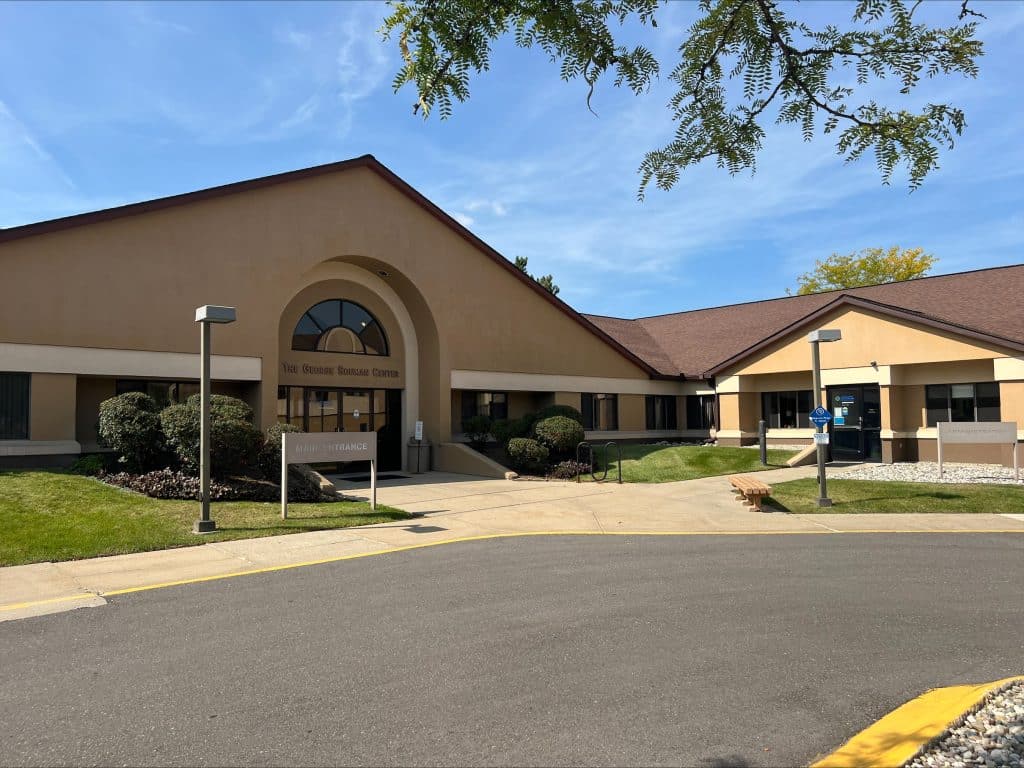
Community Mental Health for Central Michigan
We sat down with Jennifer McNally, chief clinical officer for Community Mental Health for Central Michigan in Isabella County, to learn more about the organization.
“We provide a wide range of services to our community,” McNally says. “Our primary populations that we provide services to are those with serious mental illness or severe and persistent mental illness; those with intellectual and developmental disabilities; and children with severe emotional disturbances. We provide services from birth through up to the time that a person passes away. We don’t have an age limit or requirement on services.”
Community Mental Health for Central Michigan (CMHCM) offers other resources as well, operating through a network of directly operated programs and contracted service providers.
In fact, according to their website, the organization served 10,611 people in 2024 alone. That includes community members from Clare, Gladwin, Isabella, Mecosta, Midland, and Osceola counties.
“We are primarily Medicaid-funded through the state,” McNally adds. “So, we have requirements through the state of Michigan and a number of entities that oversee the services that we provide.”
What does that mean exactly? Well, McNally explains that CMHCM is a “capitated agency,” a system where healthcare providers receive a per-person allocation of funding.
”We get a set amount of money every month, and we’re required to provide those services within that allotment of funds that we receive,” she explains. “And so those funds are set. It’s based upon the Medicaid eligibility in each of those counties. So whoever is eligible for Medicaid—however many people that is—we get a set amount of capitated payment for each individual.”
Where does the federal budget come in?
According to the American Medical Association, the One Big Beautiful Bill Act of 2025 (OBBBA) that was recently signed into law “creates new administrative requirements and conditions on eligibility (including work requirements) for patients seeking to enroll in or maintain Medicaid coverage and restricts states’ ability to use provider taxes to finance their Medicaid programs.”
A statement from the White House provides additional information about the bill in conjunction with Medicaid as well.
McNally says it’s still too soon to know how this may have an impact at the local level—or how CMHCM’s services might be affected.
She also says that, in the meantime, she and the rest of the staff are standing by the organization’s mission to provide quality care.
“We’ve taken the stance at Community Mental Health for Central Michigan that we’re providing services as usual,” she says. “So until we get some official budget information from the state or MDHHS, we’re continuing to provide all of the services that we would typically provide.”
“I’ve been with the agency for almost 19 years,” she continues. ”We’ve had lots of different things, proposals being talked about in potential areas of change that we’ve had to look at. Some things go through, some things don’t.”
“And so we’ve just always taken the stance that we’ll continue to provide the services that we do until we’ve given official notice that that has to change, and then we look at what we have to do in order to do that.”
McNally also adds that mental health services like the ones CMHCM provides are a key component of a healthy community.
“It’s the same as physical health needs. You know, if somebody has a broken arm, that needs to be treated. If somebody has a mental illness, it needs to be treated,” she says.
“It impacts pretty much every aspect of an individual’s life, in their ability to function day-to-day, in the relationships that they have, in their ability to maintain housing, to have employment, to be able to provide for themselves and those around them.”
“When individuals aren’t having those aspects being treated, we see that impact in so many different areas. It just doesn’t impact the mental health system. It can impact the community as a whole. We see an increase or a demand for healthcare providers and potentially urgent care or emergency room usage. There are impacts on our law enforcement system, our school systems, all of the nonprofits that are working with different populations. So it really does touch almost every aspect of the community.”
Despite the unknowns about how CMHCM might be impacted by changes to federal budgets, community members with concerns can still get involved and make their voice heard.
“What they can do is advocacy,” McNally says. “Reaching out to legislators, reaching out to express those concerns.”
“The Community Mental Health Association of Michigan has a huge advocacy aspect for the services that we provide across the state … They have a lot of resources on their website to direct people to how to advocate.”
McNally also says it’s important to stay informed.
“Talk to those individuals who are providing the services,” McNally concludes. “Gain an awareness and understanding of the services that we provide. So education, awareness, advocacy are kind of really the aspects that I’m really trying to promote at this point.”
Author
Related Articles
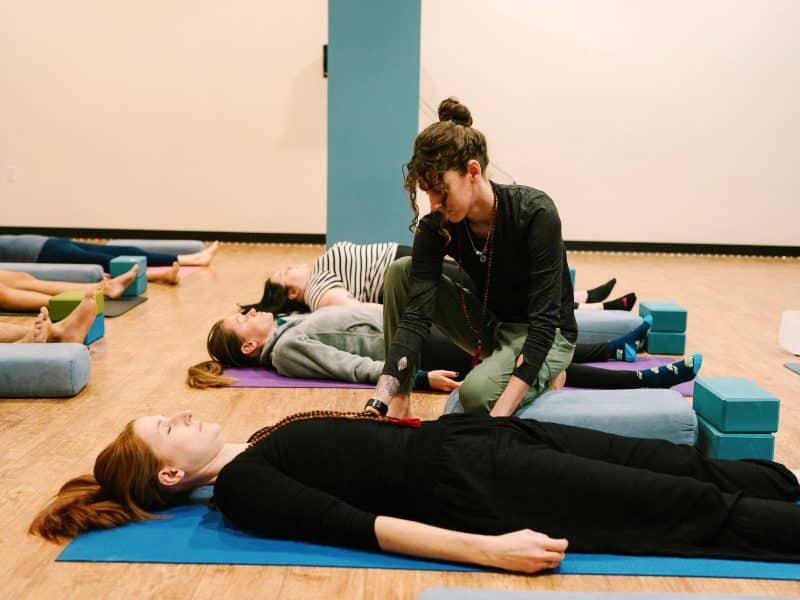
Center of Peace owner combines background in behavioral and mental health with holistic wellness
With a goal of building community and healing in a holistic way, Center of Peace in downtown Mt. Pleasant offers a variety of wellness experiences.
Nearly $300K in Seed Awards bolster Michigan’s local food and farming
Nearly $300,000 in Seed Awards from the Michigan Good Food Fund will support 18 food and farm businesses across Michigan, helping small, locally rooted operations grow and improve food access.
New salt cave in downtown Mt. Pleasant uses salt therapy to offer relaxation
A new business in downtown Mt. Pleasant is helping residents of all ages relax and breathe a little easier. Calm Cove Salt Cave offers active halotherapy sessions, family-friendly salt play, beach-inspired relaxation, and even virtual reality experiences—each designed to give your mind and body a break.


