
Serving More Than Meals: Isabella Community Soup Kitchen’s role in times of uncertainty
As potential state and federal budget cuts loom, the Isabella Community Soup Kitchen continues to provide meals, dignity, and support. With donations down and needs rising, executive director Sarah Adkins shares how ICSK feeds hundreds each week—and how community members can take action through volunteering, donations, and advocacy.
How will budget cuts at the state and federal level impact organizations in our own backyard? That’s the question on many people’s minds as we all scan news headlines for updates on the latest from Washington, D.C.
In this D.C. Decisions, Mt. Pleasant Realities series, we’re talking to representatives from several local organizations, learning about preparations they’re making for both best and worst case scenarios, along with actions that members of the community can take in the meantime.
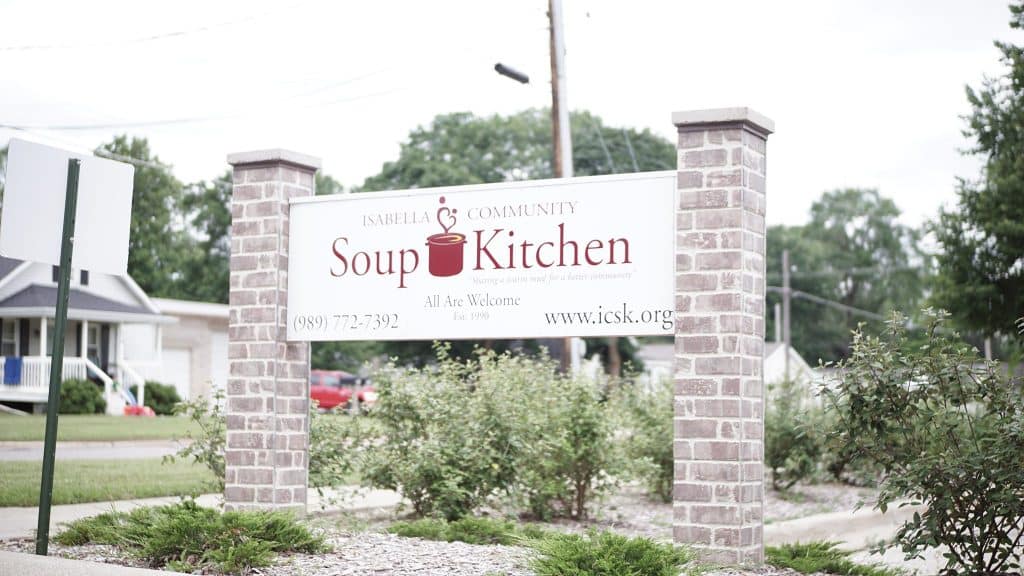
Isabella Community Soup Kitchen
“I’m a big fan of action,” says Sarah Adkins, executive director at the Isabella Community Soup Kitchen (ICSK). “I’m less of a fan of words, words, words. It doesn’t mean much unless your actions support your words.”
And Adkins and the team who make the ICSK a reality, back that belief up five days a week, all year long, making sure people who need it have a meal.
“We have a free continental breakfast every day, Monday through Friday, and then a free hot lunch as well, Monday through Friday,” Adkins explains. “Our mission is to provide free meals in a safe environment where everybody feels welcome.”
“It’s a cornerstone of who we are,” she continues, “that when anybody comes into our facility, they do feel welcome, they don’t feel uncomfortable, they don’t feel awkward or embarrassed about needing or wanting to use our services. And a big part of that is, we don’t ever ask anybody to prove their level of need, so there are no qualifying guidelines for anybody. Anybody is welcome to come in and join us.”
Established in 1990, the ICSK was founded by a Central Michigan University student who saw food insecurity in the community. Since then, the organization has been supported by area businesses and individual community members alike.
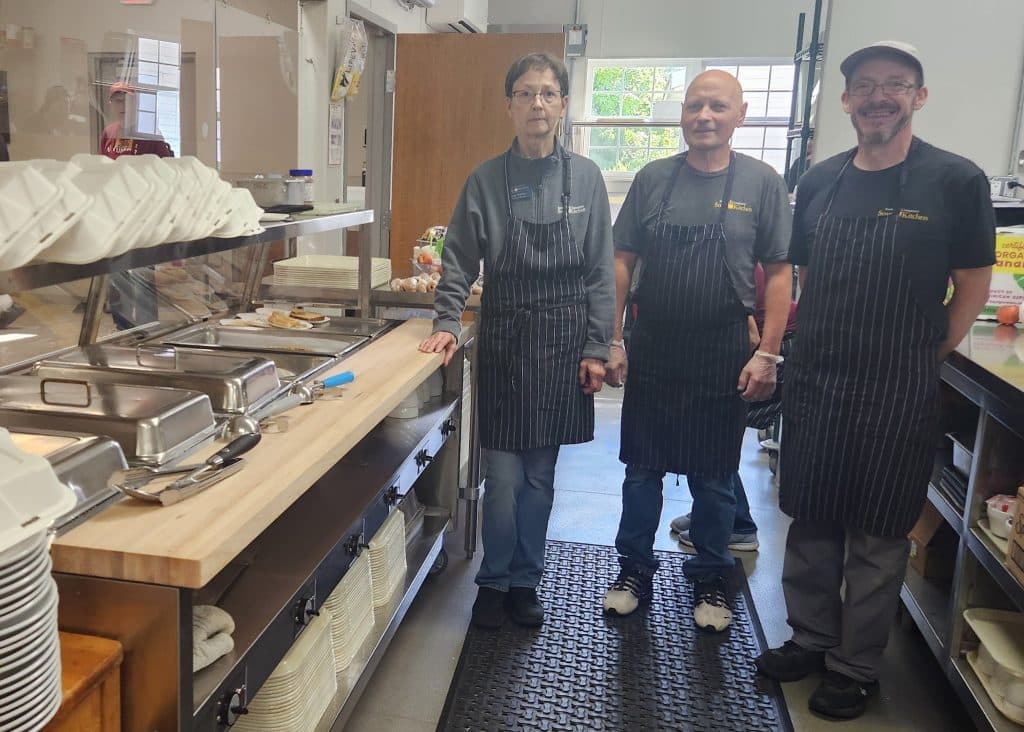
“Our guests include veterans, seniors, those that might have physical or mental disabilities,” Adkins says. “We provide meals to the guests at ICRH, our local homeless shelter; and also to the guests at the R.I.S.E. domestic violence shelter. We also see single-parent families. And other, you know, just vulnerable community members that struggle to eat and be able to have nutritious meals on a consistent basis.”
And the work doesn’t stop there.
“We share our excess food donations with seven other organizations in four counties,” she adds. “So we, on an average, are sharing about 30,000 pounds of food each month with other non-profit organizations to support their free food programs.”
Adkins says those organizations include The Helping Hands Mission in Gladwin County, the Stone Soup Kitchen in Clare County, M-46 Tabernacle Family Ministries in Gratiot County, the Weidman Methodist Church, the Community Compassion Network, The Salvation Army, and the CMU Food Pantry of Isabella County.
“We have an annual campaign we do every year, which provides more than 50% of our funding,” Adkins says. “And that just comes from community members who believe in our mission and support us financially.”
In fact, the campaign is happening now, including a special Remembering the Embers event on Sunday, Oct. 19. Adkins explains that the event is a nod to Clarence Tuma, founder of the Embers Restaurant, a long-time staple in the Mt. Pleasant community before it closed in 2007.
“He was the head of our fundraising committee back in 2002 when we needed to expand and we needed to secure property and construct the building,” Adkins says, referring to their current Mt. Pleasant location at 621 South Adams Street. “He played a critical part in that. And then later, in 2019 we needed to do some renovations to our building to better accommodate our guests. And his son, Jeff Tuma, and his wife, Vicki, agreed to spearhead an effort and help us with a $500,000 capital campaign, which allowed us to expand our dining area, renovate our commercial kitchen, and renovate our restrooms to make them more user-friendly for our guests.”
Adkins says the Remembering the Embers event will also bring in additional support the ICSK needs this year.
“Right now, we are looking at a shortfall in our monetary support,” she says. “Donations are down and expenses are up. So of course, that’s a challenge that we have, that we’re addressing.”
In addition to donations being down and expenses being up, federal Emergency Food and Shelter Program (EFSP) funding changes have also impacted the organization.
“United Ways serve as a fiduciary for the federal Emergency Food and Shelter Program funding,” shares Annie Sanders, president and CEO of United Way of Greater Central Michigan. “This is a unique federal public-private initiative that aids neighbors during times of emergency through grassroots services instead of government bureaucracies. Each year, EFSP uniquely distributes $3 million across Michigan through local nonprofits, many of whom include places of worship and faith-based charities, groups that are already on the ground helping people, to make critical food and shelter available for our community’s families and neighbors who are struck by emergency hardships. The Isabella Community Soup Kitchen is one of the beneficiaries of EFSP here locally.”
“The EFSP funding is currently indefinitely paused,” Sanders explains. “So, it hasn’t been cut, but it is held up and is not available for our community.”
“Funding pauses, cuts, and clawbacks of EFSP funding will have a rippling effect—warm meals, emergency shelter, stable housing, and other vital services used by our constituents will be less available. These are funds approved annually by Congress to help people who need it the most,” she says.
Adkins also adds that potential state and federal budget changes to programs like SNAP (Supplemental Nutrition Assistance Program) will impact the population ICSK serves.
“Food services, like the SNAP program—if those services are cut, then that certainly impacts our numbers,” Adkins says.
Adkins says that community members actively participating in fundraising events and making individual food or monetary donations is crucial to helping vulnerable populations in need of food assistance. But Adkins also adds that giving time is just as important.
“We also rely on about eight volunteers each day to help us prepare and serve our meals. So having consistent volunteers is critical and a great opportunity for folks to come in, see our facility, see what we do, and help us out in helping to provide that for our guests,” she says.
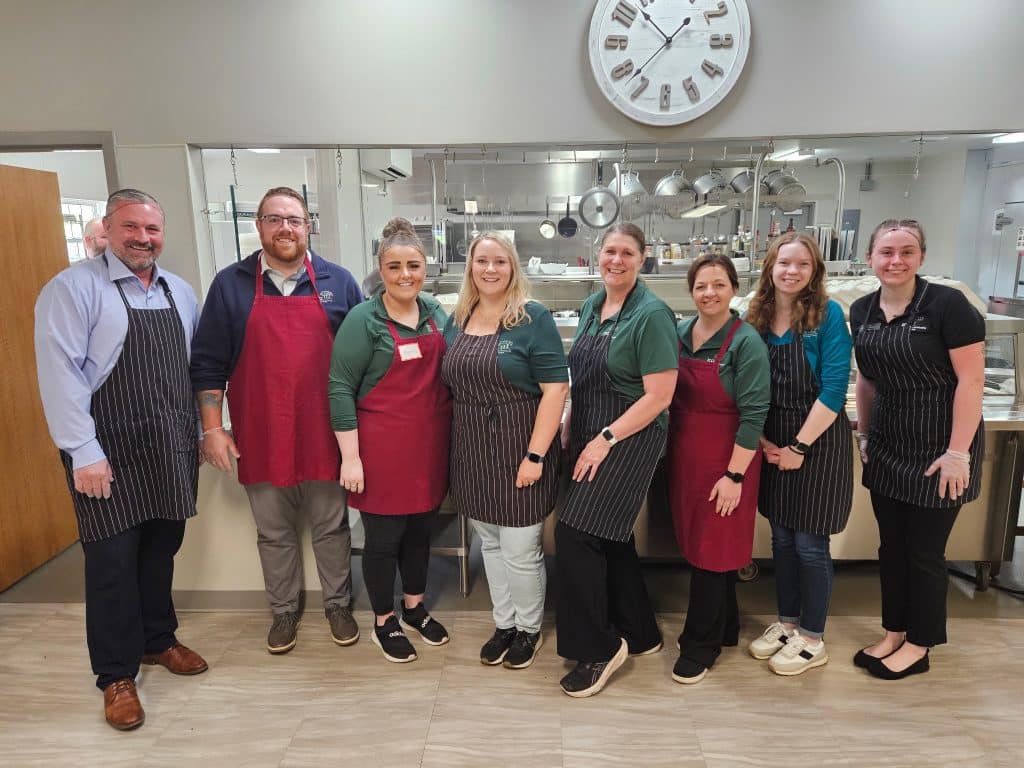
“We do have two different volunteer shifts available,” Adkins continues. “They are about three-and-a-half hours each from 8 a.m. to 10:30 a.m. and then from 10:30 a.m. to 1:30 a.m.”
In the meantime, Adkins says that she and the others behind the scenes at their organization remain focused on the needs of their guests.
“I think we have a responsibility to help each other, especially when people are in a time of need, and they come up on hard times,” she says. “It can be very dehumanizing, honestly, the process of asking for assistance. Having to navigate the system to get that assistance, then keeping that assistance.”
“It’s so important to us that people feel welcome,” Adkins concludes. “That they don’t feel bad about themselves, that they don’t take their situation of needing services, and turn it into some sort of personal shame on themselves. The thought of that kills me because I don’t want anybody to feel that way. We all need help at one point or another.”
“I’ve always just really felt so fortunate to be part of this community and being able to work with people who actually care and who actually care about human beings and wanting the best for our people. Because obviously, when you’re able to support the people in your community who need it most, everybody in the community benefits. It just uplifts everybody, and everybody wins.”
Learn more about how you can get involved at the Isabella Community Soup Kitchen at icsk.org or by calling 989-772-7392.
Author
Related Articles

A look at February events around Mt. Pleasant
February brings a variety of events to Mt. Pleasant, offering plenty of opportunities to get involved and stay connected during the winter months. From family-friendly activities to local gatherings, the community calendar features something for all ages. Here’s a look at what’s happening around town this February.
The Strickler Center combines efforts to make a difference
Six nonprofits. One roof. Thousands of neighbors served. The Strickler Center in Mt. Pleasant makes it easier for neighbors to help neighbors. Plus, WCFX’s annual Caravan of Care returns through Jan. 30. Here’s how it all works—and how you can be part of it.

Ringing in the New Year with January Events in Mt. Pleasant
Winter doesn’t slow our community down. January brings creative nights out, family-friendly events, local shopping, live music, and community conversations across Mt. Pleasant and the region. Here’s your guide to what’s coming up.


