
Clare wildlife museum preserves Wayne Webber’s legacy through conservation education
What started as one man’s private collection has turned into a public wildlife museum striving to share his legacy while educating about the importance of wildlife conservation.
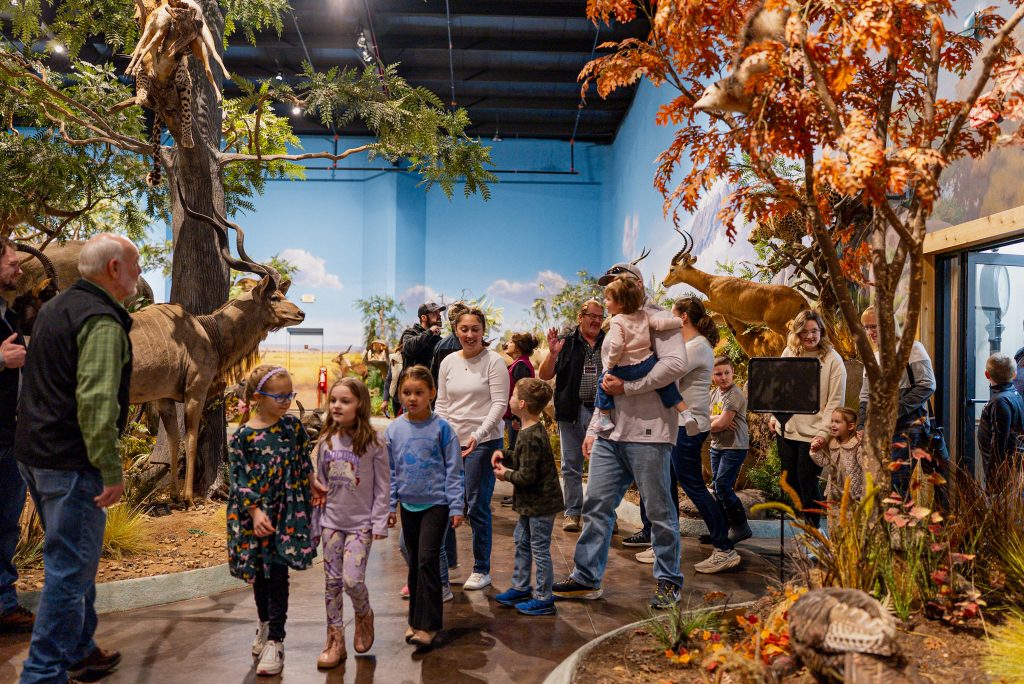
“There is so much good done for the world when hunting is done legally and ethically as Mr. Webber did, and that’s what we want people to understand,” says director of Jay’s and Webber Wildlife & Education Center, Lacey Badelt.
Badelt has made it her goal to raise awareness about the importance of hunting and wildlife conservation ever since she entered the position just one year ago.
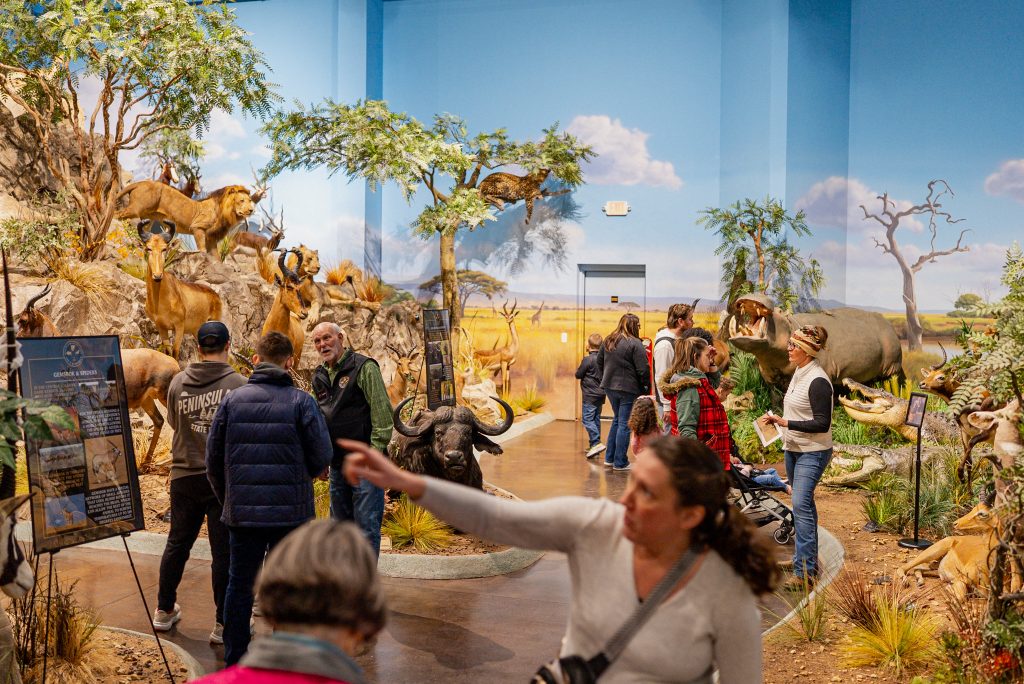
Since its opening in 2024, the Clare wildlife museum has served an important role in educating central Michigan and beyond about conservation, sharing the legacy and mission of Wayne Webber through guided tours of the center, public events, community partnerships, and more.
From Private Tours to Public Gem
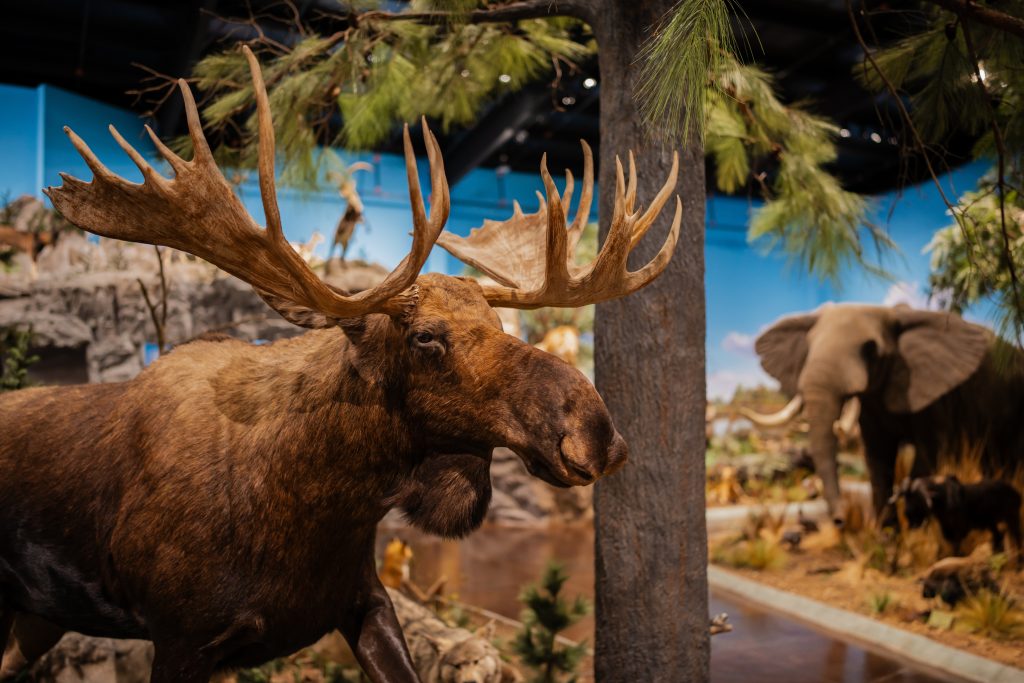
The mounts displayed in the Clare Webber Museum are Webber’s personal collection and were originally located in Macomb, Michigan, in a warehouse at his concrete company.
“He had a similar setup to this, just a little smaller. He did open that to private tours for youth groups, schools, and things like that. But it was never open to the public,” explains Badelt.
Before his passing, Webber, a long-time customer of Jay’s Sporting Goods, gifted the collection and the facility to the Poet family with the request that it be open to the public.
Now, the center is open five days a week and encourages everyone to come see it for themselves.
“You really do have to see it to understand it. It’s wild, it’s eye-opening, it’s an adventure. It’s all those things wrapped into one, and it feels like such a gem,” expresses Badelt.
Take a Tour Around the Gallery
“Every tour is a little different. It’s designed to fit the customer coming in, but it’s guest experience above all. So full-blown, guided tour? Absolutely. A wild adventure all over the gallery? The experience is whatever you want it to be,” says Badelt.
Badelt highlights the role of tour guides in making the museum experience especially unique.
“Our tour guides are full of knowledge. We always highly recommend jumping in on a tour, taking a tour, or at least kind of popping in questions here or there, because we really want you to leave with at least one piece of information,” adds Badelt.
Alan “Bubba” White was a cop for 30 years and then the owner of Cops and Donuts in Clare, Michigan. Shortly after retiring, his love of the outdoors brought him to the center, where he has been a tour guide ever since.
“My favorite part is having a family that’s never been here opening that door for the first time, and they look in and get the look of wonder,” says White. “I don’t know what they’re expecting, but they’re not expecting what they see. You can see it in their eyes.”
A typical tour lasts approximately 45 minutes, but one could just as easily find themselves spending several hours looking at all of the animals and listening to the stories of Webber.
“There are 160 different species alone of full-body mounts,” remarks White.
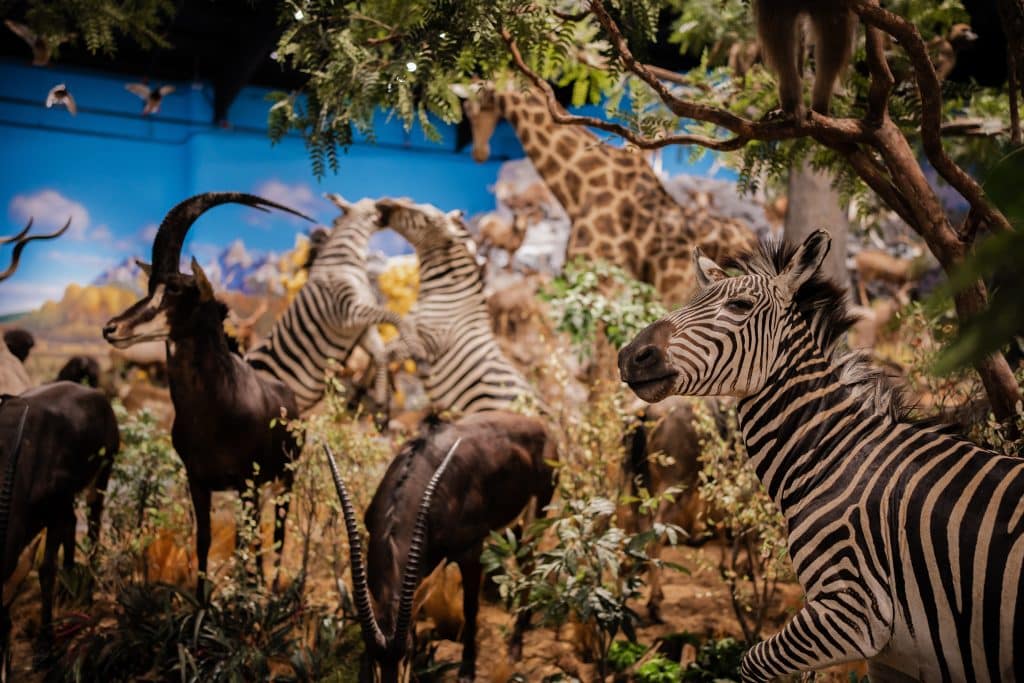
And the scenery is just as awe-inspiring as the animals themselves. Created by Wild Rooms in Shepherd, the landscape spans the icy chill of the Arctic to the heat of the African savannah.
Arguably, the most impressive of Webber’s collection is what White explains is known as Africa’s “Big Five.”
“That’s a big deal in the African hunting world to get the ‘Big Five’: the elephant, rhino, Cape buffalo, leopard, and the African lion,” says White. “He’s got one of each of the elephant and rhino, three leopards, four Cape buffalo, and four lions.”
The Sportsman’s Role in Conservation
Many people are unaware of the positive environmental impacts of conservation, and the center’s primary goal is to demonstrate that big-game hunting is more than just sport.
“I think that there’s a lot of lack of knowledge or misinformation. And I think if you don’t have all the information, you can’t make conclusive thoughts about it,” says Badelt.
Wildlife conservation through means such as hunting actually plays a significant role in maintaining healthy animal populations.
“A big part of what we do out here within the tours is sharing what conservation looks like from the sportsman’s point of view. [Webber] was an avid hunter, an avid sportsman. He hunted animals all over the world, legally and ethically,” shares Badelt.
“It’s not, ‘This is the biggest and the best lion there was in Africa, and I’m gonna take it.’ It’s not about that. The hunter is looking to conserve and keep a healthy ecosystem going,” she adds. “It’s all a part of conservation and keeping packs healthy and herds alive … It’s not about the trophy.”
African hunts, such as the ones Webber partook in, benefit not only the population but the villages themselves. These benefits include protection from animals that pose a threat to village safety as well as economic gain from auction revenue.
“Three of the animals in this exhibit were sanctioned animals, and what that means is that they were doing something so bad, they had to have the kill permit put out for them. The giraffe, the elephant, and the polar bear were all doing bad things and had to be taken out. And in all three cases, an auction was held for who got to fulfill that,” says White.
“It’s a lot better for the village than just having someone from the village go out and shoot it, where somebody like Mr. Webber can bid against other people. It’s lots of money for the village,” he explains.
Auctioned hunts also raise funding for future conservation efforts while, in many cases, positively impacting population growth. One example White highlights is the rhino population in South Africa.
“40 years ago in Botswana, there were less than 100 of those rhinos left; today there’s over 2,000. What changed? They allowed hunting. They allowed a half a dozen old bulls like that one, which are no longer breeding, to be taken. It’s not affecting the herd, but that money changes lives in those regions,” he remarks.
Making Space for the Community
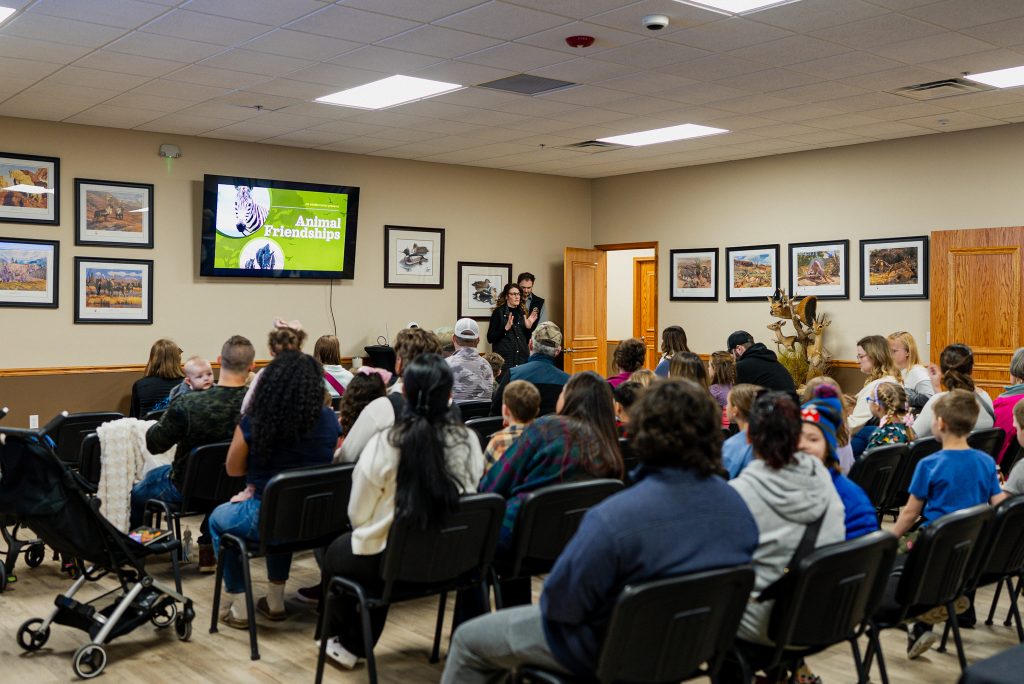
Outside of the museum, the center has been an advocate for community partnerships and offers conservation-related classes to the public with the help of local organizations.
“Our big program is hunter’s safety. [Webber] really wanted to keep the next generation involved and excited in hunting. So we do hunter’s safety out of this space here, about four to six a year,” says Badelt.
“We offer classes in conjunction with our conservation district, so they bring in their experts and provide information—we just did a beekeeping class,” she adds.
And, in the future, she would like to open up the space to community members even more.
“One of my goals is just to be a great community partner with our conservation groups, and by giving them this space and hosting things here, it seems to be bringing people in and that’s super helpful to both aspects,” shares Badelt.
“The possibilities are endless, and we’re just getting started with programs, and they’re going well so far,” she continues. “I’m super excited to keep partnering with the experts and people that know their stuff and just bring more opportunity to the area.”
Jay’s and Webber Wildlife & Education Center is located behind the Jay’s Sporting Goods’ Clare location and is open from 10 a.m. to 5 p.m. Wednesdays through Saturdays and from 10 a.m. to 4 p.m. on Sundays.
Author

Related Articles

Reading Month highlights ongoing literacy efforts across Isabella County
With literacy rates lagging across Michigan, Isabella County organizations are working collaboratively to expand access to books, programs, and reading experiences. Their shared goal: help more children build the skills and confidence they need to succeed.
Inside the decision-making behind MPPS snow days
When winter weather threatens Isabella County, Mt. Pleasant Public Schools begins evaluating conditions long before families wake up. From National Weather Service briefings to early-morning road checks, district leaders weigh multiple factors before deciding whether to cancel or delay classes—all with student safety as the top priority.

Amy Weaver’s nonprofit leadership plays a key role in Mt. Pleasant Discovery Museum’s success
At Mt. Pleasant Discovery Museum, creating meaningful experiences for children and families takes more than what visitors see on the exhibit floor. As human resources director, Amy Weaver works behind the scenes to support staff, coordinate volunteers, and help shape the museum’s direction.


